Explore the cutting edge of health and wellness through our Integrative Research portal, where we dive into the latest findings and foster discussions that shape the future of integrative medicine.
Continued research and development is being conducted for each of the topics listed below, the result of which comes in the form of articles written to help educate and inform readers of the technology.
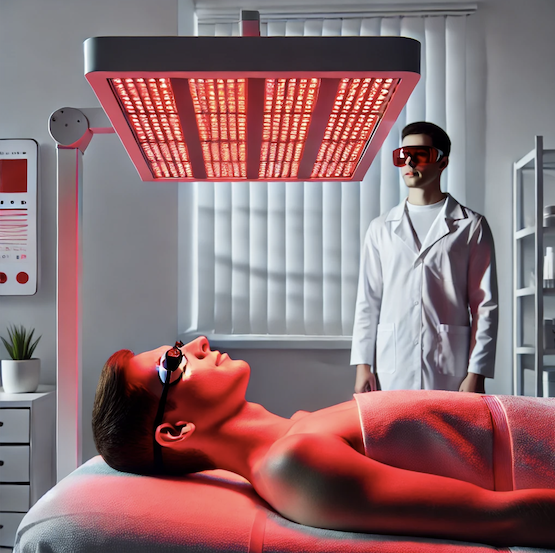
Photobiomodulation (PBM) is a non-thermal light therapy that uses specific wavelengths of light, primarily in the red (600–700 nm) and near-infrared (NIR) (750–1100 nm) spectrum, to modulate biological processes at the cellular level. PBM is also referred to as low-level laser therapy (LLLT) or cold laser therapy. The mechanism of action is primarily linked to the absorption of photons by mitochondrial chromophores, such as cytochrome c oxidase (CCO) in the electron transport chain, leading to increased adenosine triphosphate (ATP) production, modulation of reactive oxygen species (ROS), and the release of nitric oxide (NO), which collectively enhance cellular metabolism and function.
Highlights Photobiomodulation (PBM) is a safe, non-invasive therapy with promising applications for wrist and elbow disorders. Clinical evidence demonstrates improvements
Highlights Photobiomodulation (PBM) is emerging as a promising complementary therapy for mental health conditions. Clinical evidence suggests benefits for anxiety,
Brainwave Entrainment
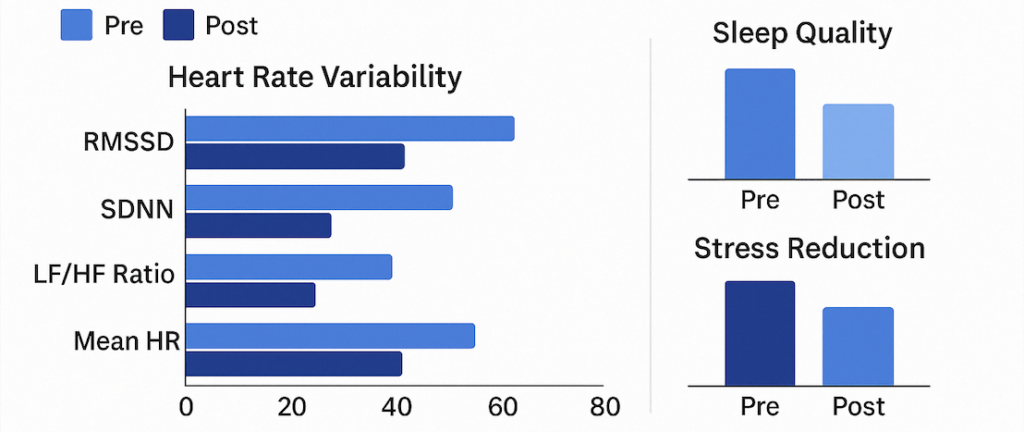
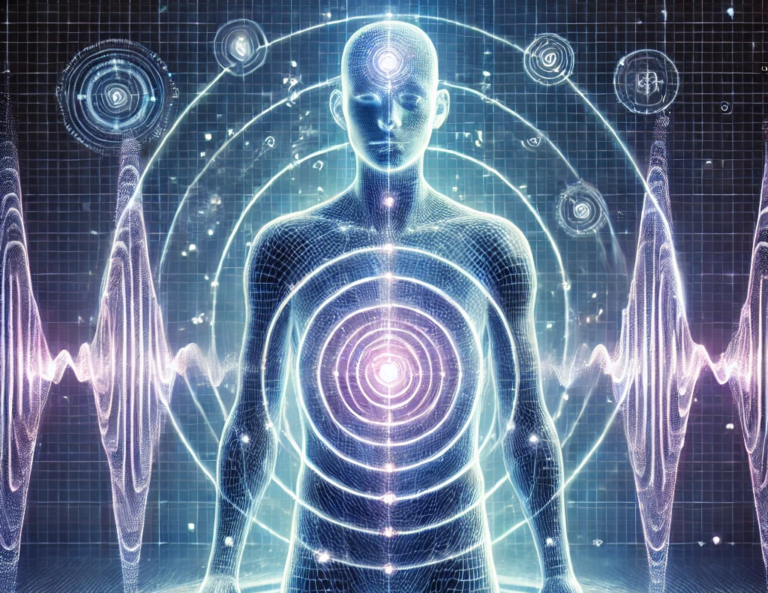
Brainwave Entrainment (BWE) is a technique that uses rhythmic external stimuli—such as sound, light, or vibration—to synchronize brainwave activity to a desired frequency. This process, known as neural entrainment, helps guide the brain into specific states associated with relaxation, focus, meditation, or sleep.
Brainwave Entrainment for Mental Wellness in Military Populations: A Pilot Study Cidral-Filho, F.J.1,2,3, Derick Ben4, Kuiper B4, Jones J4. 1Integrative
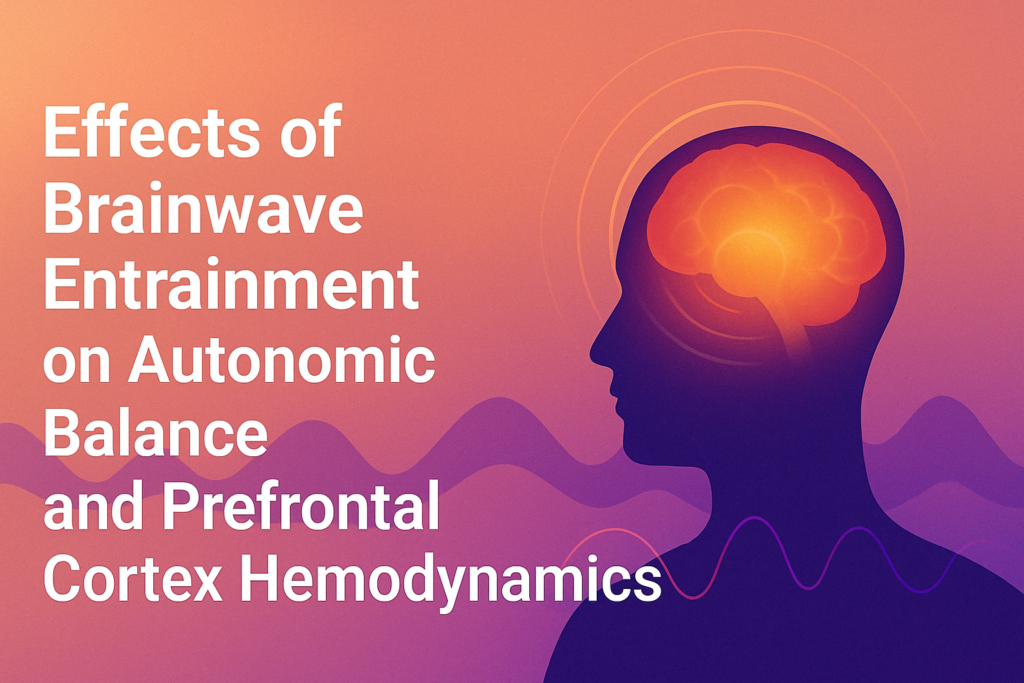
Effects of Brainwave Entrainment on Autonomic Balance and Prefrontal Cortex Hemodynamics Background Scientific evidence has demonstrated the importance of inhibitory
PEMF
PEMF stands for Pulsed Electromagnetic Field therapy. It is a non-invasive wellness modality that uses electromagnetic fields to stimulate and support cellular function. PEMF devices generate pulsating electromagnetic waves at various frequencies, which interact with the body’s cells to enhance energy production (ATP), improve circulation, reduce inflammation, and promote tissue repair and regeneration.
Highlights A pilot study evaluated a 20-minute vibroacoustic stimulation session in healthy adults. After the intervention, participants showed a breathier
Highlights Topical vacuum therapy significantly increased all four measures of skin microcirculation evaluated in the study. With intermittent vacuum application,
Vibroacoustic therapy (VAT)
Vibroacoustic Therapy (VAT) is a non-invasive therapeutic approach that uses sound vibrations, typically delivered through specialized transducers embedded in a chair, mat, or bed, to stimulate the body and nervous system. These low-frequency sound waves resonate through the body, influencing cellular activity, relaxation responses, and neurophysiological processes.
Highlights A pilot study evaluated a 20-minute vibroacoustic stimulation session in healthy adults. After the intervention, participants showed a breathier
Highlights A single vibroacoustic therapy session was associated with significant improvements across all ten wellness measures evaluated. The greatest benefits
Regenerative Medicine is a cutting-edge approach to wellness that supports the body’s natural recovery process rather than merely masking symptoms. By leveraging bioactive biomolecules, such as those derived from Wharton’s Jelly MSCs, and delivering them through non-invasive methods like topical creams, regenerative technology enhances musculoskeletal comfort, promotes mobility, and contributes to long-term well-being.
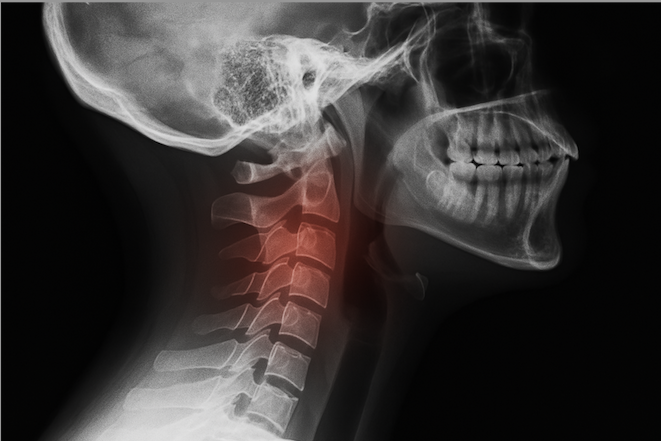
Case Report by Dr. Jeffery Rusten Bennett, MD Musculoskeletal Imaging Fellowship, Duke University 2007 General Radiology Residency, Duke University 2006
Highlights PEMF (Pulsed Electromagnetic Field) therapy is a non-invasive way to gently stimulate cells and circulation using controlled electromagnetic pulses. It may “re-charge” cellular function, support microcirculation, and help modulate...
Most Read Article
Stay Up-To-Date By Joining Our Newsletter
Subscribe to our newsletter for insights and updates on the forefront of holistic health. Receive curated content that fuels your journey to a healthier, more balanced life.
Highlights A pilot study evaluated a 20-minute vibroacoustic stimulation session in healthy adults. After the intervention, participants showed a breathier vocal quality, a speech pattern associated in the study with...
Highlights A pilot study evaluated 36 professional male athletes with acute soft tissue injuries. Adding hydrogen to standard treatment was associated with a faster return toward normal joint range of...
Highlights Topical vacuum therapy significantly increased all four measures of skin microcirculation evaluated in the study. With intermittent vacuum application, local blood flow increased from 16.5 to 41.5 AU in...
Highlights Water surrounding proteins is not simply passive—it is closely connected to protein structure, stability, and function. When proteins were denatured, or lost their normal folded structure, the organization of...
Highlights Photobiomodulation (PBM) is a safe, non-invasive therapy with promising applications for wrist and elbow disorders. Clinical evidence demonstrates improvements in pain, function, grip strength, and nerve conduction, particularly for...