


Highlights
- Photobiomodulation (PBM) is a safe, non-invasive therapy with promising applications for wrist and elbow disorders.
- Clinical evidence demonstrates improvements in pain, function, grip strength, and nerve conduction, particularly for carpal tunnel syndrome (CTS) and epicondylitis.
- PBM may enhance rehabilitation outcomes when combined with conservative treatments such as splinting and therapeutic exercise.
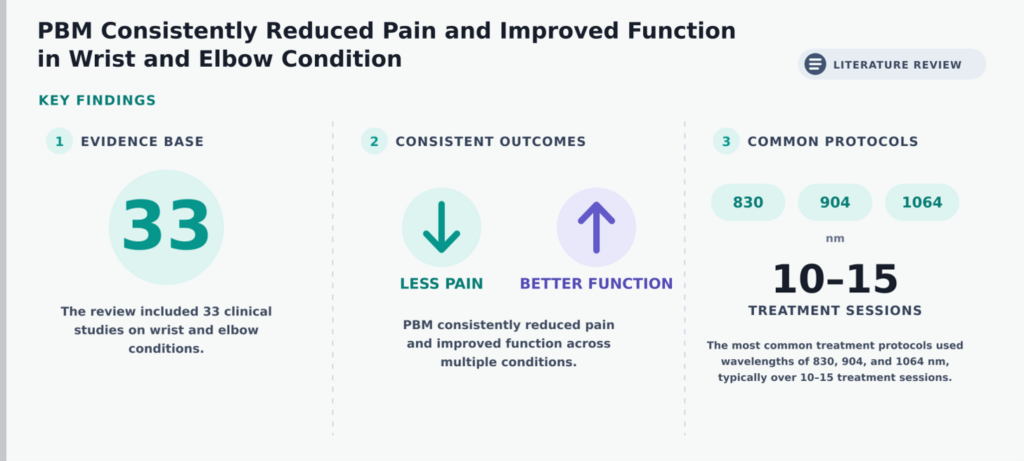
- Effective treatment protocols most commonly used wavelengths of 830 nm, 904 nm, and 1064 nm, typically delivered over 10–15 treatment sessions.
- Additional high-quality clinical trials are needed to standardize treatment parameters across different musculoskeletal conditions.
Background
Musculoskeletal disorders affecting the wrist and elbow are among the most common causes of pain, disability, and reduced work performance. Conditions such as carpal tunnel syndrome, epicondylitis, wrist fractures, and De Quervain’s tenosynovitis often require prolonged rehabilitation. This integrative review evaluated the current clinical evidence supporting photobiomodulation (PBM) for these disorders by analyzing published clinical trials involving laser therapy.
Role of Photobiomodulation
Photobiomodulation uses visible and infrared light to stimulate biological processes associated with tissue repair, inflammation reduction, pain modulation, and nerve recovery. Across the reviewed studies, PBM was investigated both as a standalone treatment and as an adjunct to rehabilitation strategies including splinting, exercise, and conventional physical therapy.
Key Findings from the Review
According to the analyzed studies, PBM may:
- Reduce pain across multiple wrist and elbow disorders.
- Improve grip strength and functional performance.
- Enhance nerve conduction and symptom severity in carpal tunnel syndrome.
- Support rehabilitation when combined with splinting or exercise programs.
- Provide short-term benefits with Low-Level Laser Therapy (LLLT), while High-Intensity Laser Therapy (HILT) may offer longer-lasting improvements in selected conditions such as epicondylitis.
Potential Clinical Applications
The reviewed literature suggests potential clinical applications for PBM in:
- Carpal Tunnel Syndrome (CTS)
- Lateral and medial epicondylitis (tennis and golfer’s elbow)
- Wrist fractures
- De Quervain’s tenosynovitis
- Chronic wrist and elbow pain
- Ulnar nerve entrapment rehabilitation
PBM appears particularly valuable as part of a comprehensive rehabilitation program rather than as a replacement for established conservative care.
Takeaway
This review analyzed 33 clinical studies evaluating photobiomodulation for wrist and elbow musculoskeletal disorders. Overall, PBM demonstrated encouraging evidence for reducing pain, improving function, and enhancing nerve recovery—especially in carpal tunnel syndrome and epicondylitis. Despite these promising findings, considerable variation in treatment protocols remains, emphasizing the need for standardized dosimetry and larger randomized clinical trials to optimize clinical recommendations.
Reference: Cidral-Filho, F. J., Donatello, N. N., Lugtu, C., Oliveira, B. H. de, & Hewitson, A. (2026). Literature Review of the Therapeutic Effects of Photobiomodulation on Wrist and Elbow Musculoskeletal Disorders. Journal of Naturology and Complementary Therapies. Accepted for publication.