


Highlights
- Topical vacuum therapy significantly increased all four measures of skin microcirculation evaluated in the study.
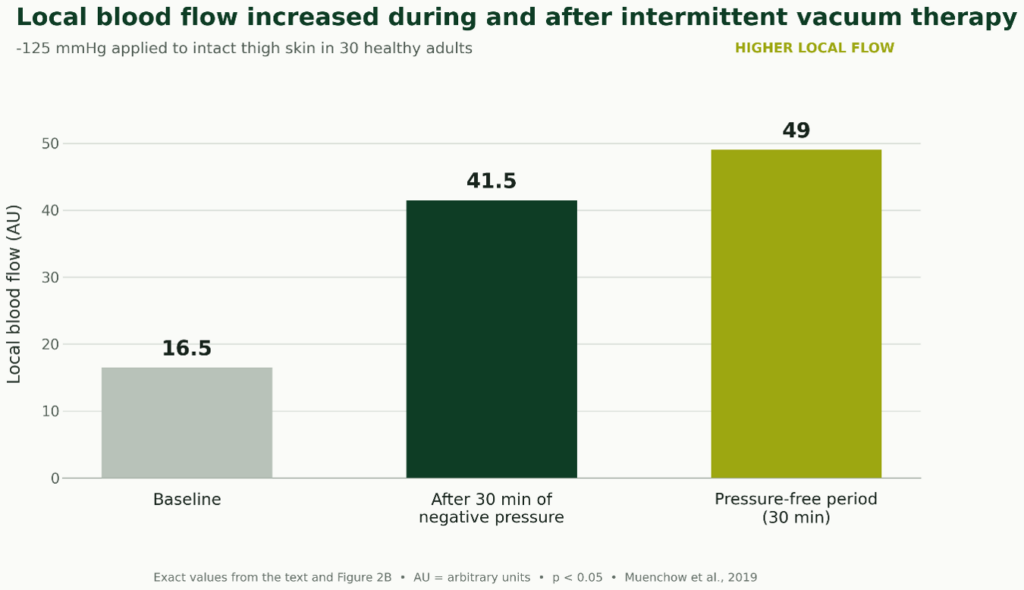
- With intermittent vacuum application, local blood flow increased from 16.5 to 41.5 AU in 30 minutes and continued rising to 49 AU during the pressure-free period.
- Local oxygen saturation increased from 57% to 74%, remaining elevated after the vacuum was released.
- The findings show how controlled negative pressure can influence circulation and oxygen delivery in superficial tissues.
Study Design
Muenchow et al. investigated how vacuum-based negative pressure therapy affects microcirculation in human skin.
The study included 30 healthy adults, with an average age of 24.9 years. Negative pressure was applied to intact skin on the thigh at −125 mmHg, while researchers monitored changes in circulation in real time.
Four measures were evaluated: local blood flow, oxygen saturation, blood flow velocity, and local hemoglobin—which provides information about how much blood is filling the small vessels in the area.
Researchers compared both intermittent and continuous vacuum protocols to understand how different patterns of negative pressure affected the local circulation.
What Did They Find?
Vacuum Therapy Significantly Increased Local Blood Flow
During the intermittent protocol, blood flow increased from 16.5 AU at baseline to 41.5 AU after 30 minutes of vacuum application.
Interestingly, the effect did not immediately disappear when the vacuum was removed. Blood flow continued to increase, reaching 49 AU during the pressure-free period.
In simple terms, the vacuum produced a clear response in the small blood vessels close to the skin, increasing local circulation.
More Oxygen Was Available in the Local Microcirculation
The effect was also observed in tissue oxygenation.
Local capillary-venous oxygen saturation increased from 57% to 74% after 30 minutes of negative pressure and remained around 73% during the following pressure-free period.
This is particularly relevant because healthy blood flow helps tissues receive the oxygen and nutrients they need for normal cellular activity.
Vacuum Influenced Multiple Aspects of Circulation at the Same Time
The researchers did not observe changes in only one measurement.
Negative pressure significantly increased all four microcirculatory parameters evaluated: local blood flow, oxygen saturation, local hemoglobin, and blood flow velocity.
The increase in local hemoglobin also indicated greater filling of the small blood vessels. Together with increased blood flow, the authors interpreted this as evidence of increased blood supply to the local tissue under negative pressure conditions.
Intermittent Vacuum Produced an Interesting Response
Another important finding was that how the vacuum was applied mattered.
Thirty minutes of intermittent negative pressure increased all four microcirculation measures, and these improvements continued during the following hour without pressure.
By comparison, keeping the vacuum continuously active for 60 minutes did not produce additional increases; some measurements gradually began to decline.
This suggests that controlled cycles of vacuum and release may produce a different circulatory response than prolonged continuous application.
Why It Matters
Vacuum therapy does more than create a mechanical pulling sensation on the skin. This study shows that controlled negative pressure can produce measurable physiological changes beneath the surface, influencing local blood flow, oxygen saturation, blood velocity, and the filling of small blood vessels.
These changes matter because microcirculation is responsible for delivering oxygen and nutrients to tissues and helping remove metabolic by-products. The authors specifically connect adequate tissue perfusion with effective tissue supply and metabolism.
The findings therefore provide a compelling physiological basis for vacuum-based technologies: by mechanically influencing superficial tissues, negative pressure can also influence the local circulatory environment.
Reference: Muenchow S, Horch RE, Dragu A. Effects of topical negative pressure therapy on perfusion and microcirculation of human skin. Clin Hemorheol Microcirc. 2019;72(4):365-374. doi:10.3233/CH-180536