


Highlights
- Photobiomodulation (PBM) is emerging as a promising complementary therapy for mental health conditions.
- Clinical evidence suggests benefits for anxiety, depression, and seasonal affective disorder (SAD), with improvements in mood, brain activity, and emotional regulation.
- Most studies reported PBM to be safe and well tolerated, with only mild and temporary adverse effects.
- Effective protocols primarily used red and near-infrared wavelengths (630–1064 nm), most commonly targeting the prefrontal cortex (DLPFC, F3, and F4 regions).
- Larger randomized clinical trials with standardized treatment protocols are needed to strengthen clinical recommendations.
Background
Mental health disorders—including anxiety, depression, and seasonal affective disorder—are among the leading causes of disability worldwide. Although pharmacological and psychological therapies remain the standard of care, treatment response is often incomplete and adverse effects may occur. This integrative review evaluated the available clinical evidence investigating photobiomodulation as a complementary treatment for mental health disorders, analyzing clinical outcomes, safety, and current research gaps.
Role of Photobiomodulation
Photobiomodulation uses red and near-infrared light to stimulate biological processes involved in brain function, including mitochondrial activity, cerebral blood flow, neuroplasticity, and cellular metabolism. Across the reviewed studies, PBM was delivered using lasers or LEDs, primarily targeting frontal brain regions associated with mood regulation, emotional processing, and cognitive function.
Key Findings from the Review
According to the analyzed studies, PBM may:
- Reduce symptoms of anxiety and depression.
- Improve mood, emotional regulation, and overall psychological well-being.
- Increase brain activity and cerebral metabolism.
- Enhance sleep quality in individuals with depression.
- Produce only mild, transient adverse effects, most commonly headache or temporary irritation.
The review also identified substantial variability in treatment parameters—including wavelength, dose, treatment duration, and application sites—highlighting the need for standardized clinical protocols.
Potential Clinical Applications
The literature suggests potential clinical applications for PBM in:
- Generalized Anxiety Disorder (GAD)
- Major Depressive Disorder (MDD)
- Seasonal Affective Disorder (SAD)
- Depression associated with traumatic brain injury (TBI)
- Pathological fear
- Mood regulation and sleep disturbances
PBM is proposed as a complementary, non-pharmacological approach that may be combined with conventional psychological and medical treatments.
Takeaway
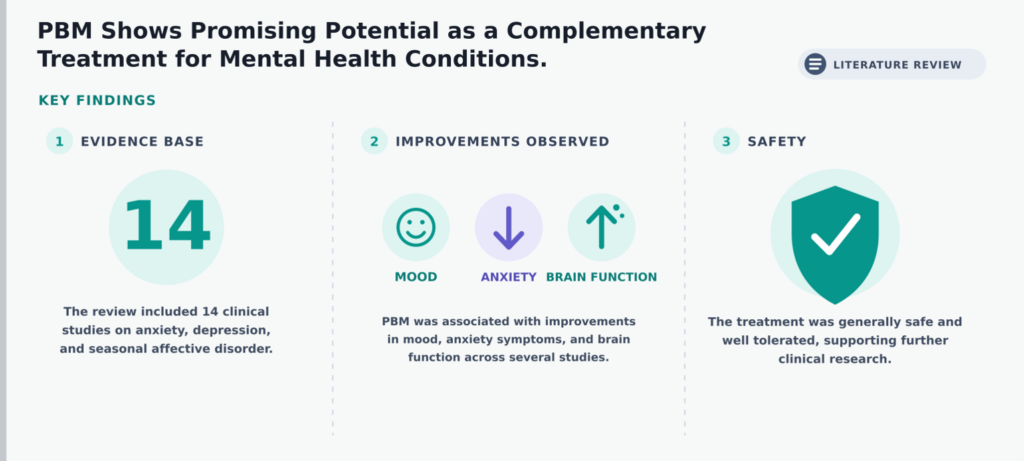
This review analyzed 14 clinical studies published through 2025 evaluating photobiomodulation for mental health conditions. Overall, PBM demonstrated encouraging therapeutic potential, particularly for anxiety, depression, and seasonal affective disorder, while maintaining an excellent safety profile. Although current evidence is promising, standardized treatment protocols and larger randomized controlled trials are essential to establish optimal clinical recommendations and expand the role of PBM in mental health care.
Reference: Cidral-Filho, F. J., Hewitson, A., Vitorino, V. L., & Donatello, N. (2025). Exploring photobiomodulation as a complementary approach for mental health: an integrative review. Lasers in medical science, 40(1), 502. https://doi.org/10.1007/s10103-025-04738-8