


Highlights
- Participants with insomnia experienced significant improvements in sleep quality
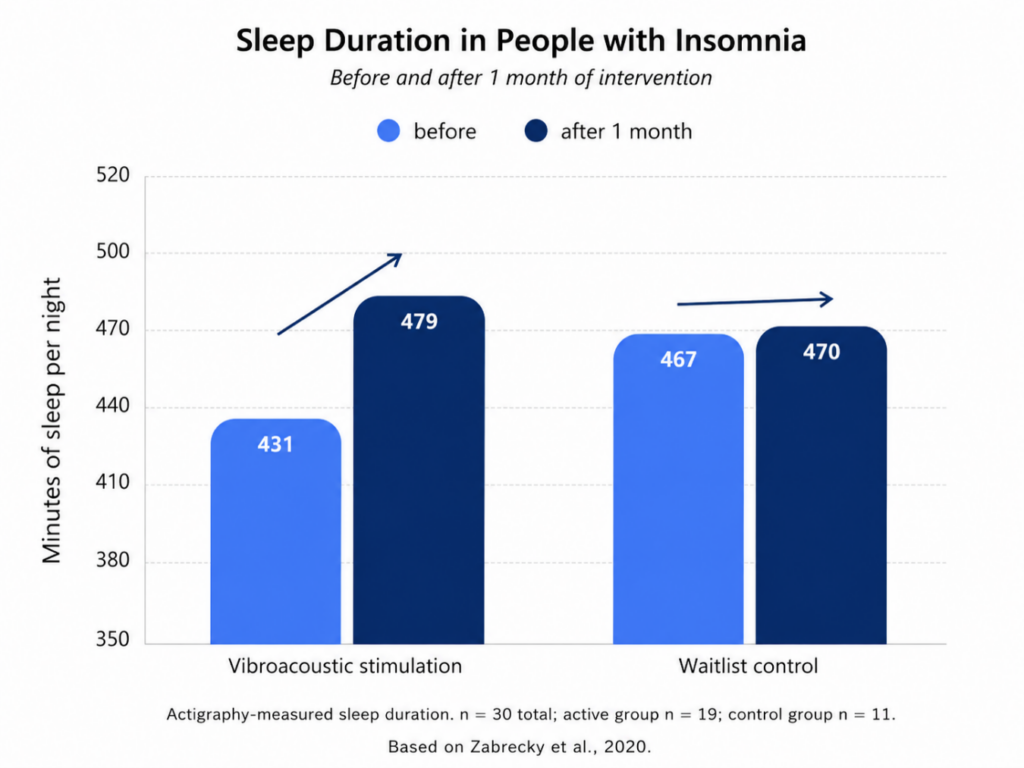
- Total sleep time increased by approximately 30.6 minutes per night
- Insomnia severity was significantly reduced
- Functional MRI revealed changes in brain connectivity associated with sleep regulation
Study Design
Researchers from Thomas Jefferson University investigated the effects of a vibroacoustic stimulation program in individuals with chronic insomnia. Thirty participants were randomized to receive one month of vibroacoustic stimulation or remain on a waitlist control.
The intervention included:
- Twice-weekly in-clinic vibroacoustic sessions
- Daily at-home auditory sessions
- Pre- and post-assessments using actigraphy, sleep questionnaires, and resting-state functional MRI
What Did They Find?
Increased Sleep Duration
Participants receiving vibroacoustic stimulation increased their sleep duration by approximately 30 minutes per night.
Reduced Insomnia Severity
Insomnia Severity Index scores improved significantly following the intervention.
Changes in Functional Brain Connectivity
Resting-state fMRI demonstrated significant connectivity changes involving brain regions associated with sensory processing, arousal regulation, and sleep networks, including the thalamus, caudate nucleus, cerebellum, sensorimotor cortex, nucleus accumbens, and prefrontal cortex.
Why It Matters
Insomnia is often characterized by persistent neural hyperarousal. This study suggests that vibroacoustic stimulation may help modulate neural networks involved in sleep regulation while improving both objective and subjective sleep outcomes.
The authors concluded that one month of vibroacoustic stimulation improved insomnia symptoms, increased sleep duration, and produced measurable changes in functional brain connectivity.
Reference: Zabrecky G, Shahrampour S, Whitely C, et al. An fMRI Study of the Effects of Vibroacoustic Stimulation on Functional Connectivity in Patients with Insomnia. Sleep Disord. 2020;2020:7846914. Published 2020 Feb 4. doi:10.1155/2020/7846914
Link to the study: Click here