


Highlights
- Hyperthermic baths produced significant improvements in depressive symptoms within just 2 weeks
- Early results were superior to those observed with a structured exercise program
- The intervention increased core body temperature by approximately 2°C
- Improvements in sleep quality were also reported
Study Design
Researchers conducted a randomized controlled trial involving 45 adults with moderate depression. Participants were assigned to receive either hyperthermic baths or a structured moderate-intensity exercise program in addition to their usual care.
The heat intervention consisted of immersion in 40°C water for approximately 20 minutes, followed by a heated resting period designed to maintain elevated body temperature. Treatments were performed twice weekly over eight weeks.
What Did They Find?
After only two weeks, participants receiving hyperthermic baths experienced significantly greater reductions in depressive symptoms compared with those participating in the exercise program.
The between-group difference reached 4.3 points on the Hamilton Depression Rating Scale (HAM-D), a magnitude considered clinically meaningful by the investigators.
The heat therapy group also demonstrated:
- Significant improvements in self-reported depression scores (BDI-II)
- Better sleep quality
- Strong treatment adherence
- No treatment-related serious adverse events
Core body temperature increased from approximately 36.7°C to 38.6°C during the intervention, confirming a substantial systemic thermal response.
Why It Matters
Growing evidence suggests that body temperature regulation, sleep quality, and mood are closely interconnected.
The authors note that individuals with depression often experience disruptions in circadian rhythms, thermoregulation, and sleep architecture. Controlled elevation of body temperature may influence these physiological systems and support pathways associated with emotional well-being.
Another important finding was the speed of response. While many conventional approaches may take several weeks to produce noticeable changes, improvements in the heat therapy group were observed within the first two weeks of treatment.
Although larger studies are needed, these findings support the growing interest in whole-body heating strategies as complementary approaches for promoting relaxation, physiological comfort, and overall well-being.
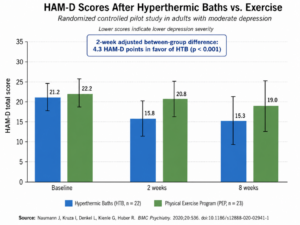
Reference: Naumann J, Kruza I, Denkel L, Kienle G, Huber R. Effects and feasibility of hyperthermic baths in comparison to exercise as add-on treatment to usual care in depression: a randomised, controlled pilot study. BMC Psychiatry. 2020;20(1):536. Published 2020 Nov 11. doi:10.1186/s12888-020-02941-1
Link to access the study: Click here