


Highlights
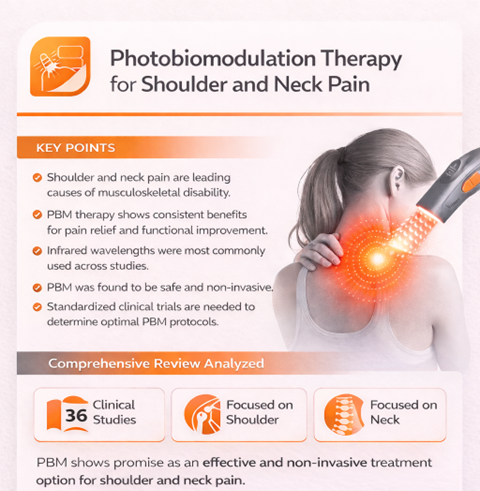
- Shoulder and neck pain are leading causes of musculoskeletal disability.
- PBM therapy shows consistent benefits for pain relief and functional improvement.
- Infrared wavelengths were most commonly used across clinical studies.
- PBM was found to be safe and non-invasive.
- Protocol variability highlights the need for standardized clinical trials.
Scope of the Review
This comprehensive review analyzed 36 clinical studies evaluating the effects of photobiomodulation therapy on shoulder and neck pain and associated disability. Of these studies:
- 12 focused on neck conditions
- 24 focused on shoulder conditions
- 1 addressed both regions simultaneously
Frequently Studied Conditions
The most commonly investigated conditions included:
- Subacromial Impingement Syndrome (SAIS)
- Myofascial Pain Syndrome (MPS)
These conditions demonstrated the most consistent improvements in pain and functional outcomes following PBM therapy.
Key Findings
Across the reviewed studies, PBM therapy was associated with:
- Reduction in pain intensity
- Improvements in functional capacity
- Favorable safety profiles with no serious adverse effects
Infrared wavelengths predominated, suggesting deeper tissue penetration may be particularly relevant for shoulder and neck applications.
Research Gaps
The review identified limited evidence for PBM use in more complex or chronic conditions, such as:
- Cervical osteoarthritis
- Post-stroke shoulder pain
These areas were highlighted as priorities for future research.
Takeaway
Photobiomodulation therapy represents a safe and promising non-invasive option for managing shoulder and neck pain. While current evidence supports its effectiveness, further standardized and high-quality trials are needed to establish optimal treatment protocols and broaden clinical applicability.
Reference: Cidral-Filho, F., Donatello, N. N., Lugtu, C., & Hewitson, A. (2024). Photobiomodulation on shoulder and neck pain and disability: A comprehensive review. Lasers in medical science, 39(1), 263. https://doi.org/10.1007/s10103-024-04212-x