

Highlights
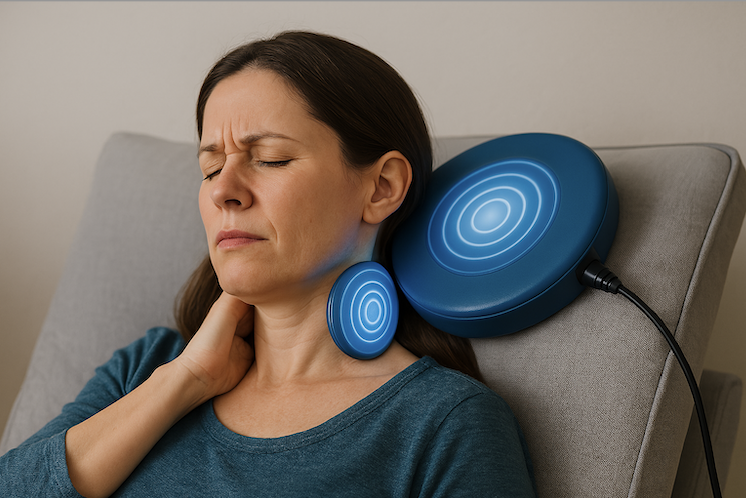
- Non-invasive option for chronic neck pain: In a randomized, double-blind, placebo-controlled trial, whole-body PEMF therapy was tested as a gentle, drug-free approach for people with cervical osteoarthritis–related neck pain.
- Meaningful pain relief where placebo did not: Patients using PEMF reported significant reductions in neck pain, while the placebo group showed no meaningful change over the same 3-week period.
- Better movement and daily function: The PEMF group showed improvements in neck range of motion, less muscle spasm, and better scores on a neck pain and disability questionnaire, suggesting easier movement in daily life.
- Well tolerated with no reported side effects: Sessions (30 minutes, twice daily on a PEMF mat) were reported as safe and well tolerated, with no treatment-related adverse effects noted in this study.
If you’ve ever struggled with chronic neck pain due to cervical osteoarthritis (COA), you know how difficult it can be to find lasting relief. A 2006 clinical study published in Rheumatology International explored the potential of Pulsed Electromagnetic Field (PEMF) therapy as a non-invasive treatment option—and the results are promising.
Study Overview
In this randomized, double-blind, placebo-controlled trial, researchers evaluated whether whole-body PEMF therapy could help reduce pain and improve function in people diagnosed with cervical osteoarthritis.
-
Participants: 34 patients with cervical osteoarthritis
-
Treatment Protocol: Lying on a PEMF therapy mat (Wave Ranger MRS 2000+) for 30 minutes, twice a day, for 3 weeks
-
PEMF Intensity: Average 40 μT
Key Results
-
✅ Significant Pain Relief: Patients receiving PEMF therapy reported substantial pain reduction, while those in the placebo group experienced no noticeable change.
-
✅ Improved Neck Mobility & Function: The PEMF group also showed marked improvements in:
-
Range of motion (flexion and extension)
-
Muscle relaxation (reduced paravertebral muscle spasms)
-
Daily function (measured by the Neck Pain and Disability Scale)
-
-
✅ No Adverse Effects: The treatment was well-tolerated, with no side effects or negative outcomes reported.

Figure 1. Percentage Improvement in Neck Pain, Mobility, and Disability After 3 Weeks of PEMF vs Sham. Bars represent the percentage improvement from baseline in pain (VAS), neck mobility (chin–manubrium and occiput–C7 distances), and Neck Pain and Disability Scale (NPDS) scores after 3 weeks of treatment. Higher bars indicate greater improvement in each measure. The PEMF group showed large improvements across all outcomes, while the sham group showed little or no change. * Statistically significant improvement from baseline within the PEMF group (p < 0.001); changes in the sham group were not statistically significant.
Why It May Work
Researchers believe PEMF helps by:
-
Stimulating collagen production
-
Encouraging cartilage cell (chondrocyte) growth
-
Supporting bone and tissue repair through gentle electric stimulation of the extracellular matrix
The Bottom Line
This study suggests that PEMF therapy may be a safe and effective complementary treatment for cervical osteoarthritis, helping to relieve pain, improve range of motion, and enhance overall function—without side effects.
If you’re dealing with chronic neck pain and looking for a drug-free option, PEMF may be worth discussing with your healthcare provider.
Reference: Sutbeyaz ST, Sezer N, Koseoglu BF. The effect of pulsed electromagnetic fields in the treatment of cervical osteoarthritis: a randomized, double-blind, sham-controlled trial. Rheumatol Int. 2006;26(4):320-324. doi:10.1007/s00296-005-0600-3