


Highlights
- Violet photobiomodulation (PBM ~405 nm) represents an emerging modality within visible-light PBM.
- Violet light demonstrates strong antimicrobial and antiviral activity across multiple pathogens.
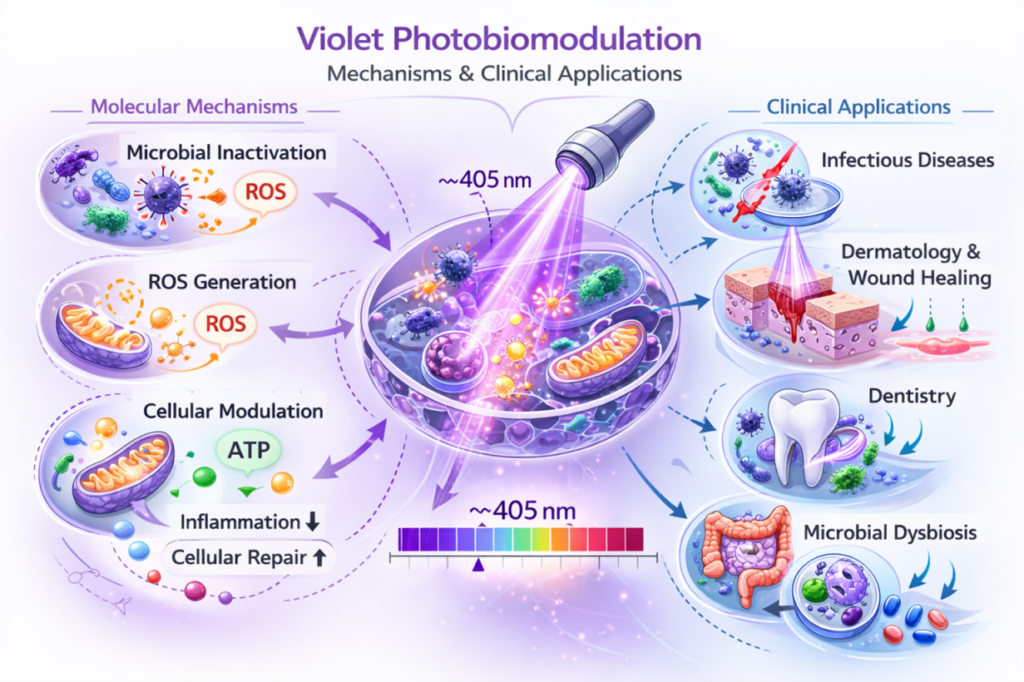
- Biological effects include modulation of reactive oxygen species (ROS), mitochondrial signaling, and cellular metabolism.
- Preclinical evidence suggests applications in tissue repair, inflammation modulation, and microbial control.
- Clinical evidence remains limited, emphasizing the need for standardized dosimetry and translational trials.
Background
Photobiomodulation has traditionally focused on red and near-infrared wavelengths; however, visible light — particularly violet light around 405 nm — has gained attention due to its distinct photochemical and antimicrobial properties. The mechanism involves absorption by endogenous chromophores, leading to reactive oxygen species generation and downstream biological signaling pathways that influence inflammation, metabolism, and microbial viability.
Role of Photobiomodulation
The reviewed literature indicates that violet PBM differs from classical PBM mechanisms by relying strongly on photochemical reactions and ROS-mediated pathways. These processes may contribute to antimicrobial effects, immune modulation, and potential benefits in wound healing and dermatological conditions. Experimental studies have explored violet PBM across in vitro, preclinical, and limited clinical contexts, highlighting both therapeutic potential and the importance of appropriate dosing parameters.
Key Findings from the Review
According to the analyzed studies, violet PBM may:
- Exert antimicrobial and antiviral effects through ROS-mediated microbial inactivation
- Modulate mitochondrial signaling and cellular metabolic activity
- Influence inflammatory pathways and immune responses
- Support tissue repair and cellular proliferation under specific dosimetric conditions
- Demonstrate wavelength-dependent biological effects distinct from red/NIR PBM
The review emphasizes variability in outcomes due to heterogeneity in irradiation parameters, highlighting a critical need for protocol standardization.
Potential Clinical Applications
The literature suggests potential clinical relevance of violet PBM in:
- Infectious disease control and antimicrobial therapy
- Dermatology and wound healing
- Dentistry and oral microbial management
- Inflammatory and regenerative medicine contexts
- Adjunctive approaches for microbial dysbiosis-related conditions
Despite promising findings, translation to routine clinical practice remains limited due to insufficient human trials.
Takeaway
Violet photobiomodulation emerges as a complementary PBM modality with strong antimicrobial and photochemical properties. While preclinical and in vitro evidence demonstrates promising biological and therapeutic effects, clinical translation requires standardized dosimetry, safety evaluation, and well-designed randomized trials to clarify its role across medical applications.
Reference: Cidral, F. J., Hewitson, A., Donatello, N., & Piovezan, A. P. (2025). Violet photobiomodulation: biological effects and health implications. Lasers in medical science, 40(1), 292. https://doi.org/10.1007/s10103-025-04550-4