


Highlights
- Hydrogen-rich water intake reduced markers of oxidative stress.
- Improvements were observed in lipid metabolism and insulin resistance parameters.
- Patients with impaired glucose tolerance showed improved glucose handling.
- Findings suggest a potential preventive role in type 2 diabetes.
Study Design
This randomized, double-blind, placebo-controlled, crossover clinical trial included 30 patients with type 2 diabetes mellitus (T2DM) managed by diet and exercise and 6 patients with impaired glucose tolerance (IGT). Participants consumed 900 mL/day of hydrogen-rich water or placebo water for 8 weeks, followed by a 12-week washout period. Biomarkers related to oxidative stress, insulin resistance, and glucose metabolism were assessed at baseline and after each intervention, including oral glucose tolerance testing.
What Did They Find?
Hydrogen-rich water intake resulted in significant reductions in modified low-density lipoprotein (LDL), small dense LDL, and urinary 8-isoprostanes. Additional trends included decreased oxidized LDL and free fatty acid levels, along with increased plasma adiponectin and extracellular superoxide dismutase. Notably, four of the six patients with IGT exhibited normalization of the oral glucose tolerance test following hydrogen-rich water supplementation.
Why It Matters
These findings support the role of hydrogen-rich water as a potential adjunct strategy for improving metabolic health. By reducing oxidative stress and favorably influencing lipid and glucose metabolism, hydrogen-rich water supplementation may contribute to the prevention of insulin resistance and the progression to type 2 diabetes.
Reference: Kajiyama S, Hasegawa G, Asano M, et al. Supplementation of hydrogen-rich water improves lipid and glucose metabolism in patients with type 2 diabetes or impaired glucose tolerance. Nutr Res. 2008;28(3):137-143. doi:10.1016/j.nutres.2008.01.008
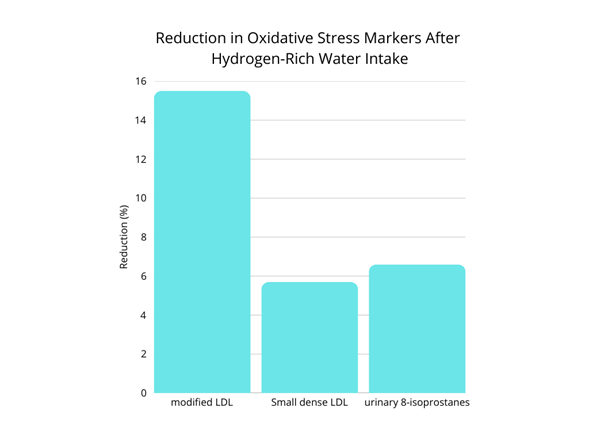
After 8 weeks of daily intake of hydrogen-rich water, participants showed significant reductions in markers related to oxidative stress and metabolic risk. Modified LDL cholesterol decreased by 15.5%, while small, dense LDL and urinary 8-isoprostanes were reduced by 5.7% and 6.6%, respectively.