


Highlights
- Hydrogen-rich water significantly improved flow-mediated dilation (FMD), a marker of endothelial function
- Participants consumed water containing 3.5 mg of dissolved molecular hydrogen
- Improvements were observed within 30 minutes of consumption
- Findings suggest molecular hydrogen may help preserve nitric oxide-mediated vascular responses
Study Design
Healthy adult volunteers were randomly assigned to consume either hydrogen-rich water or placebo water. The hydrogen-rich water contained approximately 7 ppm of dissolved hydrogen, providing about 3.5 mg of molecular hydrogen in 500 mL of water.
Researchers evaluated endothelial function using flow-mediated dilation (FMD) of the brachial artery, a widely used noninvasive measure of vascular responsiveness. Measurements were taken before and after participants consumed the study beverage.
What Did They Find?
Participants who consumed hydrogen-rich water experienced an improvement in endothelial function.
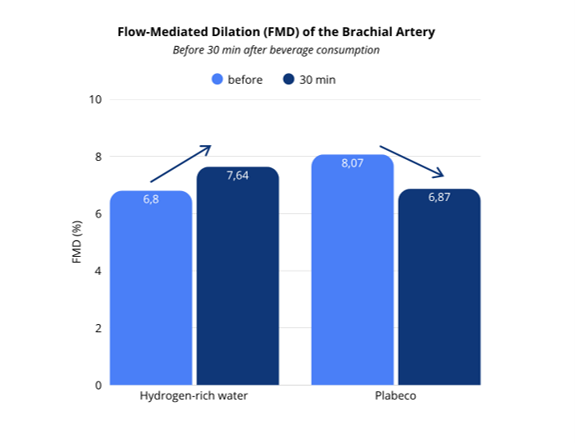
Average FMD increased from 6.80% to 7.64% following hydrogen intake, whereas the placebo group showed a decrease from 8.07% to 6.87%. The difference between groups was statistically significant.
Importantly, researchers did not observe evidence that hydrogen directly dilated blood vessels at rest. Instead, the findings suggest hydrogen may help preserve the body’s normal vascular response to blood-flow-induced shear stress.
Why Does Endothelial Function Matter?
The endothelium is the thin layer of cells lining blood vessels. It plays a central role in regulating blood flow, vascular tone, and nitric oxide signaling.
When endothelial function declines, vascular responsiveness can become impaired, contributing to processes associated with aging, cardiovascular risk, metabolic dysfunction, and chronic inflammation.
Flow-mediated dilation is commonly used in research because it reflects how effectively blood vessels respond to increases in blood flow and the availability of nitric oxide.
How Might Molecular Hydrogen Work?
The authors propose that molecular hydrogen may help maintain endothelial function by selectively reducing highly reactive oxidative molecules, particularly hydroxyl radicals and peroxynitrite, while preserving nitric oxide signaling.
This is important because excessive oxidative stress can reduce nitric oxide bioavailability, limiting the ability of blood vessels to respond appropriately to physiological demands. By helping maintain redox balance, molecular hydrogen may support normal vascular function.
Why This Study Matters
This study demonstrated that a single consumption of hydrogen-rich water containing 3.5 mg of dissolved molecular hydrogen was associated with an acute improvement in a recognized marker of vascular function.
Although larger and longer-term studies are still needed, these findings contribute to a growing body of research exploring the role of molecular hydrogen in supporting healthy oxidative balance, endothelial function, and cardiovascular wellness.
Reference: Sakai T, Sato B, Hara K, et al. Consumption of water containing over 3.5 mg of dissolved hydrogen could improve vascular endothelial function. Vasc Health Risk Manag. 2014;10:591-597. Published 2014 Oct 17. doi:10.2147/VHRM.S68844
Link to the study: Click here