


Highlights:
- A new way to support chronic pain care: When vibroacoustic therapy was added to a multidisciplinary rehabilitation program, participants experienced improvements in comfort, mood, and overall functioning.
- Guided sessions made the biggest impact: Professionally led vibroacoustic sessions were associated with the strongest reductions in pain and improvements in relaxation, highlighting the value of expert-guided care.
- Self-care helped sustain the benefits: At-home vibroacoustic sessions supported ongoing symptom management and body awareness, helping participants stay engaged between clinical visits.
- A practical, non-invasive addition to rehab: This approach shows how combining technology, professional guidance, and self-care may enhance long-term chronic pain rehabilitation outcomes.
Chronic pain is more than a physical experience — it disrupts work, emotional wellbeing, and daily functioning. In a compelling study titled “Vibroacoustic treatment to improve functioning and ability to work: a multidisciplinary approach to chronic pain rehabilitation”, Campbell et al. (2021) explore how integrating vibroacoustic therapy (VAT) into a multidisciplinary rehabilitation program may offer new hope for patients grappling with long-term pain and related mood disturbances.
What Is Vibroacoustic Therapy?
Vibroacoustic therapy is a sensory-based intervention that combines low-frequency sinusoidal sound vibrations (20–120 Hz), soothing music, and therapeutic support. The vibration stimulates deep-pressure mechanoreceptors, such as Pacinian corpuscles, which may help block pain signals and promote relaxation through a process known as sympathetic resonance. Specific frequencies are chosen to target different areas of the body — for example, 40 Hz for the thighs and 60 Hz for the chest.
The Program: Guided Sessions + At-Home Support
The intervention used a mixed-methods design with two stages:
- Stage 1: Professional-guided sessions (5 weeks)
Participants received two sessions per week using a physioacoustic chair, guided and tailored by trained professionals. - Stage 2: Self-care sessions at home (5 weeks)
Participants then completed self-administered sessions using a cushion-like device delivering 40 Hz vibration for 23 minutes, and logged their experience.
Key Findings
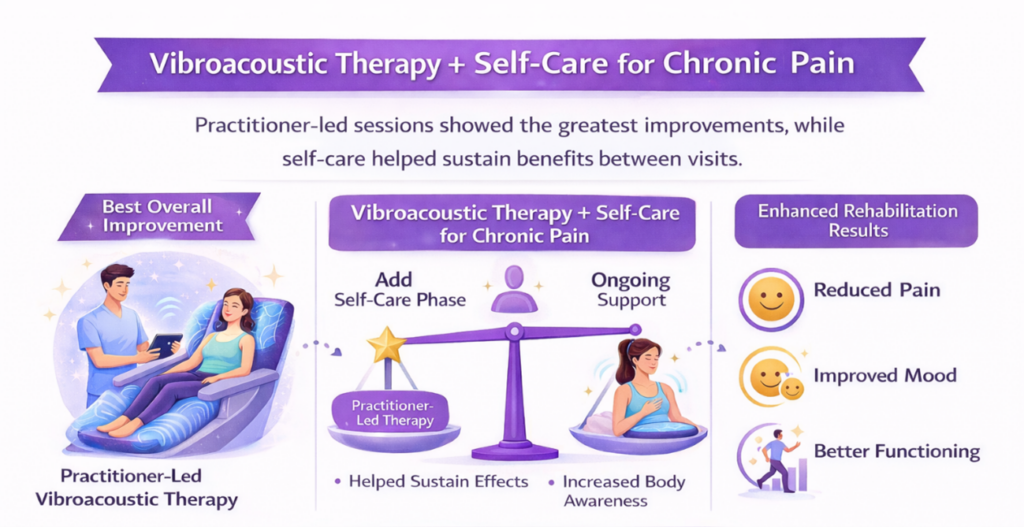
The study found that professional-led sessions yielded the most pronounced improvements, particularly in pain reduction, mood enhancement, and overall relaxation. However, self-care sessions also played a meaningful role, especially in managing milder symptoms and sustaining therapeutic effects between intensive phases.
Interestingly, many participants became more aware of their bodily sensations throughout the program. The return of symptoms during “washout” periods (when treatment paused) further underscored the intervention’s perceptible impact.
Why This Matters
This study highlights the value of combining guided therapy with empowered self-care. While professional expertise ensures precise targeting and deeper impact, ongoing home-based vibroacoustic sessions may extend benefits, improve autonomy, and support long-term functional improvements — especially within multidisciplinary rehabilitation frameworks.
Takeaway
Vibroacoustic therapy, when integrated with a structured rehabilitation plan and bolstered by a self-care component, shows strong potential as a non-invasive, body-centered modality for managing chronic pain. With its ability to engage the nervous system and induce a relaxation response, VAT represents an innovative step toward restoring quality of life for those living with persistent discomfort.
Reference: Campbell EA, Hynynen J, Burger B, Vainionpää A, Ala-Ruona E. Vibroacoustic treatment to improve functioning and ability to work: a multidisciplinary approach to chronic pain rehabilitation. Disabil Rehabil. 2021;43(14):2055-2070. doi:10.1080/09638288.2019.1687763