


For many people, a good night’s sleep feels like a distant dream. But a new preliminary study suggests that vibroacoustic therapy (VAT)—delivered through inHarmony devices—may help improve sleep quality and even emotional balance.
Researchers are following new inHarmony users over the course of a year, measuring sleep, mood, and overall wellness with validated questionnaires at different stages: before use, after 30 days, at 6 months, and at 1 year.
And already at the 30-day mark, the results are promising.
What Changed in Just One Month?
Among three participants who completed the first follow-up (all women, average age 51.9), the trends were clear:
😴 More Restorative Sleep
- 50% increase in feelings of adequate sleep
- 48% improvement in optimal sleep scores (reaching the maximum possible value)
- 33% fewer reports of waking up short of breath or with headaches
- 36% reduction in daytime sleepiness
💙 Better Mood and Emotional Balance
- 61% fewer depressive symptoms
- 43% reduction in anxiety
- 29% less stress
- 15% decrease in generalized anxiety symptoms
Interestingly, overall well-being (measured by the WHO-5 Well-Being Index) improved only slightly (+6%). This may suggest that bigger-picture wellness shifts take longer to emerge compared to symptom-specific improvements.
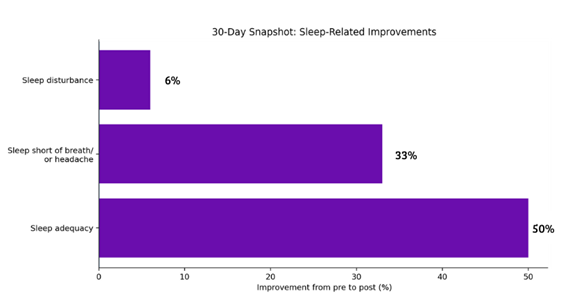
Figure 1. 30-Day Improvements in Sleep Outcomes Following inHarmony Use (MOS Sleep Scale). Horizontal bars show the percent improvement from before using inHarmony (baseline) to the 30-day follow-up.
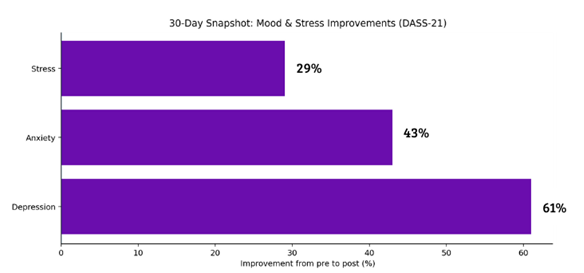
Figure 2. 30-Day Improvements in Mood and Stress Symptoms Following inHarmony Use (DASS-21). Horizontal bars show the percent improvement from before using inHarmony (baseline) to the 30-day follow-up for DASS-21 subscales.
Why This Matters
Although only three people were included in this early analysis, the consistency of the improvements is striking. Participants reported better sleep and significant drops in stress, anxiety, and depression symptoms—all within the first month of use.
Of course, this is still a work in progress, with a very small sample size. But the early signals point to vibroacoustic therapy as a potentially powerful supportive tool for sleep and emotional health.
What’s Next
The study will continue tracking participants at 6 months and again at 1 year to see whether these benefits last—or even grow stronger—over time.
If just 30 days of use can bring such noticeable changes, what might the long-term effects look like?
👉 Would you try sound and vibration-based relaxation to improve your sleep and mood?
Link to full report: Read here