


Highlights
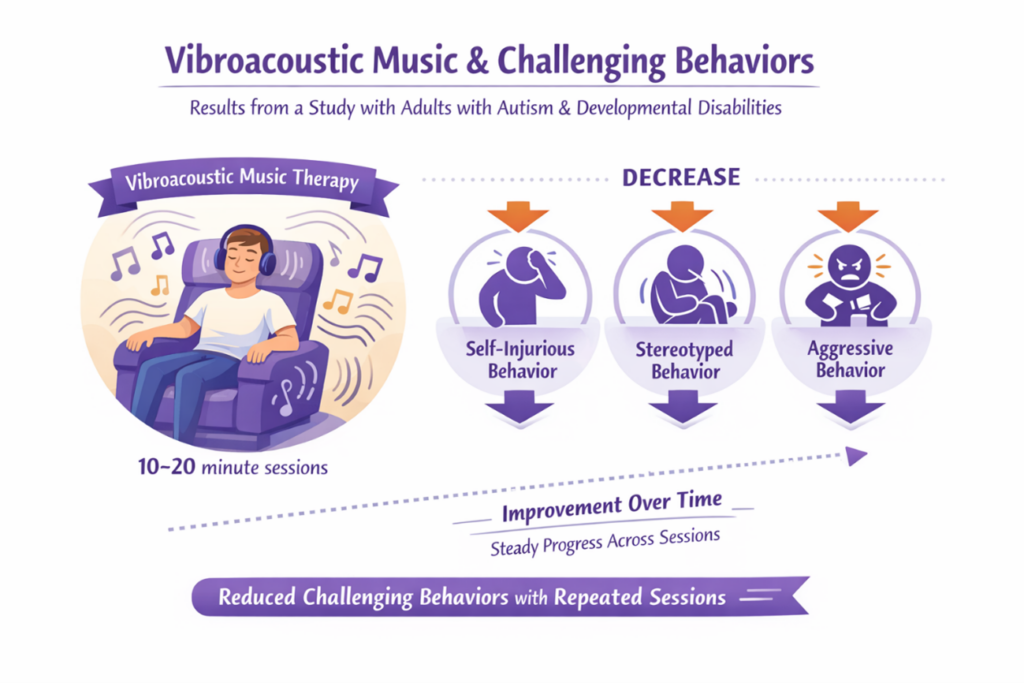
- Short sessions, meaningful behavior shifts. In this randomized controlled study, 10–20 minute vibroacoustic music sessions were associated with reductions in challenging behaviors in adults with autism and developmental disabilities.
- Improvements across multiple behavior domains. Participants showed decreases in self-injurious behavior, stereotyped behavior, and aggressive/destructive behavior following the vibroacoustic music intervention.
- A clear “progress over time” signal. For self-injurious behavior, the study reported a steady improvement trend across sessions, suggesting benefits may build with repeated use.
- A simple, structured approach. The protocol used a vibroacoustic chair (30–80 Hz) with consistent, comfortable settings — highlighting how vibroacoustic music can be delivered in a repeatable, practical format.
The aim of this study was to evaluate the effects of vibroacoustic music on reducing challenging behaviors — including self-injurious behavior (SIB), stereotyped behavior (SB), and aggressive destructive behavior (ADB) — in individuals diagnosed with Autism Spectrum Disorder (ASD) and developmental disabilities.
Intervention Used in the Study
Twenty adult participants (13 men and 7 women), aged 22 to 57 years and diagnosed with ASD and developmental disabilities, took part in this randomized controlled trial. Participants were randomly assigned to two groups. The first group received vibroacoustic music therapy for 5 weeks, while the second group received the same therapy in the following 5 weeks.
The intervention involved sessions lasting between 10 and 20 minutes, using a vibroacoustic chair equipped with built-in speakers that delivered vibrations in the 30–80 Hz frequency range, along with two additional speakers for audible sound. The musical track used was Listen to your heart by Bindu, performed with guitar, percussion, and keyboard. Volume and vibration intensity were preset at a comfortable and consistent level throughout the sessions. Behavioral assessments were conducted using the Behavior Problem Inventory (BPI), supported by video analysis and assistant ratings.
Results Presented by the Study
The study found that vibroacoustic music significantly reduced self-injurious, stereotyped, and aggressive behaviors. For SIB, there was a significant reduction in the treated group compared to controls, with a clear linear trend of improvement across sessions. These outcomes suggest a promising role of vibroacoustic stimulation in managing behavioral challenges in individuals with ASD and developmental disabilities.
Authors’ Interpretation
The authors concluded that vibroacoustic music may effectively reduce challenging behaviors in individuals with autism and developmental disabilities. However, they emphasized the need for further research to confirm these findings and to better understand the mechanisms behind the therapeutic effects observed.
Reference: Lundqvist, L.O., Andersson, G., & Viding, J. (2009). Effects of vibroacoustic music on challenging behaviors in individuals with autism and developmental disabilities. Research in Autism Spectrum Disorders, 3(2), 390–400.
Link to full paper: Read here