


Highlights
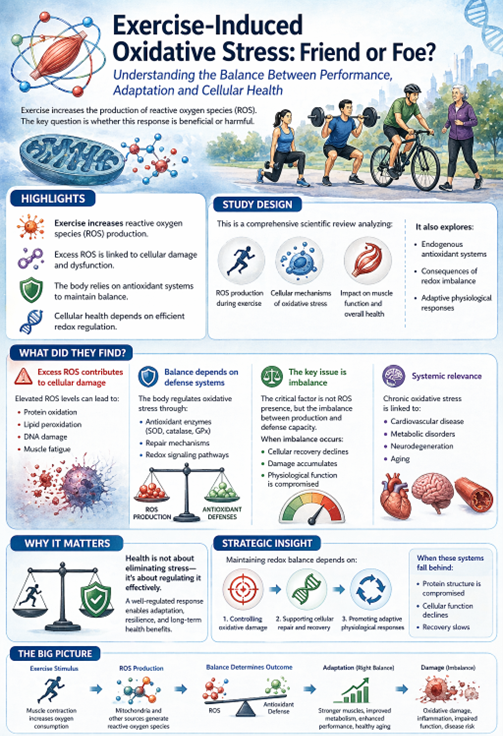
- Exercise can increase the production of reactive oxygen species, or ROS.
- When ROS levels rise too much, they may contribute to cellular damage.
- The body depends on built-in antioxidant systems to help keep things in balance.
- Health and performance may be influenced by how well the body manages redox balance.
Study Design
This was a scientific review, meaning it brought together and discussed existing research rather than testing a new intervention in one single trial.
The review looked at:
- How reactive oxygen species (ROS) are produced during exercise
- How oxidative stress develops at the cellular level
- How these processes may affect muscle function and broader aspects of health
It also discussed:
- The body’s own antioxidant systems
- What can happen when redox balance is disrupted
- How the body may adapt to these challenges over time
What Did They Find?
The review described oxidative stress as a matter of balance rather than something that is always harmful on its own.
- High ROS levels may contribute to cellular damage
ROS are reactive molecules naturally produced in the body, especially during exercise. When they build up too much, they may damage important cell components. - Possible effects of excess ROS included:
- Protein oxidation, which can affect how proteins work
- Lipid peroxidation, which means damage to fats that make up cell membranes
- DNA damage, which may affect cellular function
- Muscle fatigue, which may reduce performance and recovery
- The body has built-in defense systems
The review explained that the body helps manage oxidative stress through:
-
- Antioxidant enzymes, such as SOD, catalase, and GPx, which help neutralize reactive molecules
- Repair mechanisms, which help fix damage when it occurs
- Redox signaling pathways, which are communication systems involved in cellular adaptation and regulation
- The key issue is imbalance
The review emphasized that the main concern is not simply the presence of ROS, but whether ROS production becomes greater than the body’s ability to manage and repair the effects.
- When that balance is lost, the review suggested that:
- Recovery may become less efficient
- Damage may build up over time
- Normal physiological function may be affected
- Broader health relevance was also discussed
Chronic oxidative stress was described as being linked to conditions involving the cardiovascular system, metabolism, the nervous system, and aging-related decline.
Why It Matters
Oxidative stress is often talked about as if it is always bad, but this review presents a more balanced view. The body naturally produces reactive molecules, and some of them are involved in normal signaling and adaptation, especially during exercise.
What seems to matter most is whether the body can keep these processes under control. When antioxidant defenses and repair systems keep up, the body may be able to adapt and recover. When they fall behind, damage may accumulate more easily.
In practical terms, this means that health and performance may depend not on removing all oxidative stress, but on supporting the body’s ability to regulate it well.
Key Insight
👉 The review suggests that cellular health depends less on eliminating ROS completely and more on maintaining a healthy balance between oxidative stress and the body’s defense systems.
Reference: Powers SK, Deminice R, Ozdemir M, Yoshihara T, Bomkamp MP, Hyatt H. Exercise-induced oxidative stress: Friend or foe?. J Sport Health Sci. 2020;9(5):415-425. doi:10.1016/j.jshs.2020.04.001
Read the full paper: Click here