


Highlights
- Pain reduced by 50% after a 3-week intervention.
- Jaw function improved by nearly 60%.
- Heat therapy played a key role in muscle relaxation and symptom relief.
- Non-invasive intervention with meaningful short-term outcomes.
Study Design
This clinical pilot study included 7 patients with temporomandibular dysfunction (TMD), undergoing a 3-week treatment program performed three times per week.
The intervention combined:
-
- Strain/counterstrain technique
- Phonophoresis (ultrasound + anti-inflammatory gel)
- Heat therapy
- Jaw stretching exercises
Outcomes included:
- Pain (NPRS)
- Jaw function (JFLS)
What Did They Find?
After 3 weeks:
- Pain decreased by 50% (p < 0.001)
- Functional limitation decreased by 59.58% (p < 0.001)
- Large clinical effect sizes were observed
- Improvements in both pain and jaw function
These findings suggest that the combined therapeutic approach was effective in managing TMD symptoms.
Why It Matters
Heat therapy is a well-established modality for managing musculoskeletal pain and dysfunction.
Its physiological effects include:
- Muscle relaxation
- Reduction of muscle tension and spasms
- Increased local circulation
- Improved joint mobility
Within this multimodal protocol, heat therapy likely contributed to symptom relief and functional improvement.
For heat-based therapeutic technologies — such as those developed by Avacen — these findings support the relevance of thermal interventions as:
- Non-invasive treatment options
- Complementary strategies to conventional care
- Physiologically driven approaches to pain modulation
While the study is preliminary and multimodal, it highlights the importance of thermal therapy as a key component in effective musculoskeletal treatment strategies.
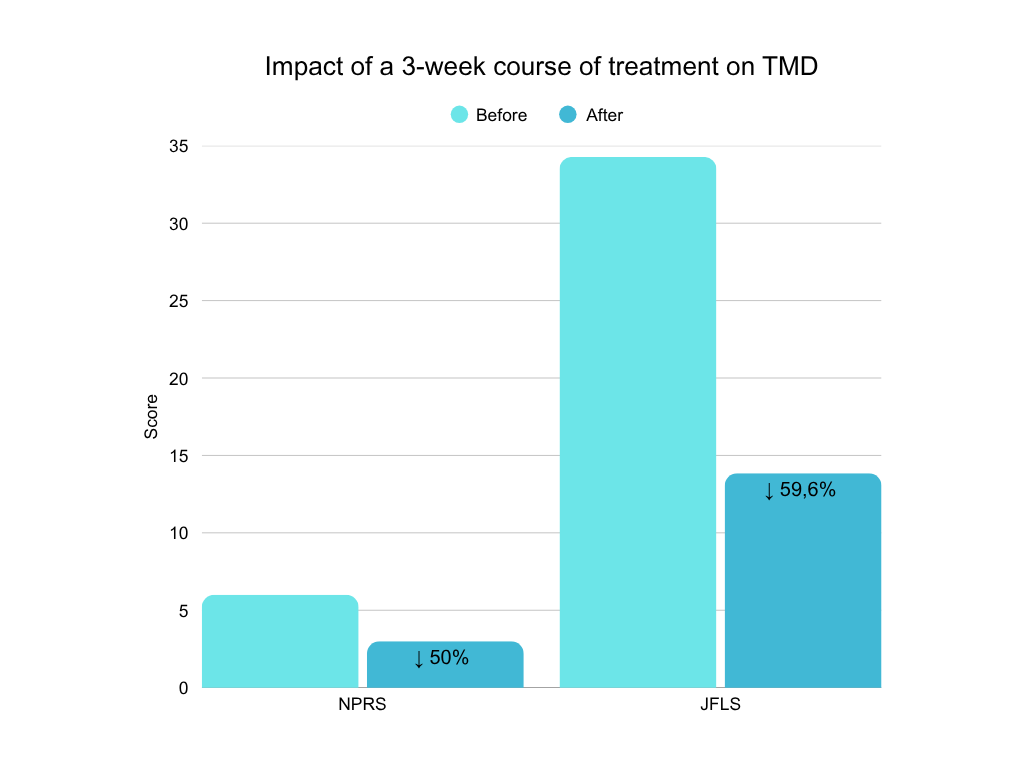
Reduction in pain (NPRS) and jaw functional limitation (JFLS) after a 3-week multimodal intervention in patients with temporomandibular dysfunction (TMD). A 50% decrease in pain and a 59.6% reduction in functional limitation were observed. These outcomes reflect the combined effects of the applied therapies, including heat therapy, stretching exercises, strain/counterstrain technique, and phonophoresis.
Reference: Azam I, Chahal A, Kapoor G, et al. Effects of a program consisting of strain/counterstrain technique, phonophoresis, heat therapy, and stretching in patients with temporomandibular joint dysfunction: [corrected]. Medicine (Baltimore). 2023;102(32):e34569. doi:10.1097/MD.0000000000034569