


Highlights
- Elite athletes showed elevated levels of oxidative stress biomarkers
- Increased oxidative stress was observed regardless of sport discipline
- The body responded by recruiting antioxidant defense mechanisms
- Findings highlight the importance of maintaining redox balance during periods of high physical demand
Study Design
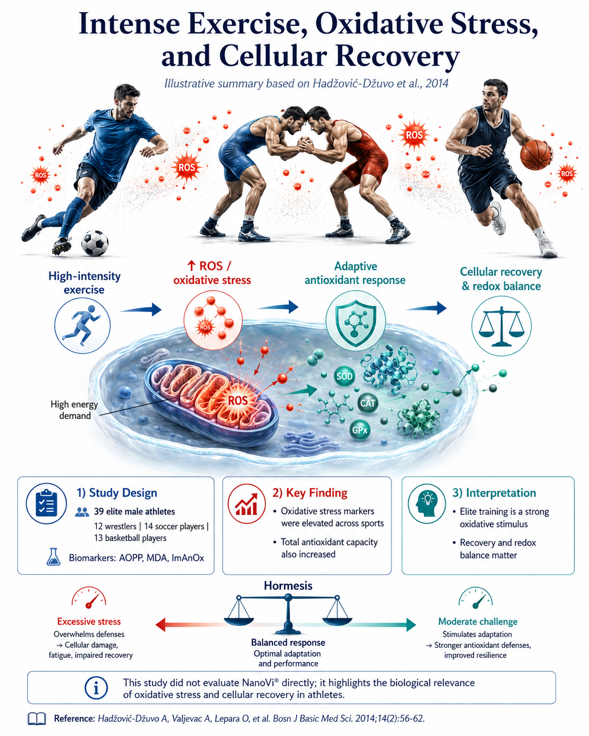
Researchers evaluated the oxidative status of 39 elite male athletes, including soccer players, basketball players, and wrestlers with international competitive experience. The objective was to determine whether different sport disciplines were associated with distinct oxidative stress profiles.
The study assessed several biomarkers related to oxidative damage and antioxidant defense, including:
- Malondialdehyde (MDA), a marker of lipid peroxidation
- Advanced Oxidation Protein Products (AOPP)
- Total antioxidant capacity (ImAnOx)
What Did They Find?
The researchers found that elite athletes exhibited elevated oxidative stress markers compared to laboratory reference values. At the same time, total antioxidant capacity was also increased, suggesting an adaptive physiological response to ongoing training demands.
Although oxidative stress levels were elevated across all groups, there were no significant differences between soccer players, wrestlers, and basketball players for most of the biomarkers analyzed.
The authors concluded that participation in elite-level sports represents a strong oxidative stimulus that triggers the recruitment of antioxidant defense systems in an effort to maintain physiological balance.
Why It Matters
During energy production, cells naturally generate reactive oxygen species (ROS). At physiological levels, these molecules play important roles in cellular signaling, adaptation, and normal biological function. However, when ROS production exceeds the body’s ability to neutralize them, oxidative stress can occur.
High-intensity exercise increases metabolic demand and oxygen consumption, both of which can contribute to elevated ROS production. While this response is part of the body’s adaptation to training, excessive oxidative stress may increase the need for cellular repair and recovery.
Importantly, the authors also discuss the concept of hormesis—the idea that moderate oxidative challenges can stimulate beneficial adaptations, while excessive oxidative stress may overwhelm protective mechanisms. Maintaining an appropriate balance between oxidative stimuli and recovery is therefore essential for long-term performance and health.
These findings help explain why strategies that support cellular resilience, protein integrity, and healthy redox balance continue to attract interest among athletes, clinicians, and researchers focused on human performance and healthy aging.
Although this study did not evaluate NanoVi®, it highlights the biological relevance of oxidative stress and cellular recovery processes in individuals exposed to high physiological demands.
Reference: Hadžović-Džuvo A, Valjevac A, Lepara O, Pjanić S, Hadžimuratović A, Mekić A. Oxidative stress status in elite athletes engaged in different sport disciplines. Bosn J Basic Med Sci. 2014;14(2):56-62. doi:10.17305/bjbms.2014.2262
Link to the study: Click here