


Highlights
- Vibroacoustic therapy was associated with significant improvements in depressive symptoms
- More than one-third of participants achieved a clinical response after five weeks
- EEG recordings revealed measurable changes in brain activity
- Findings suggest effects on neural networks involved in mood regulation
Study Design
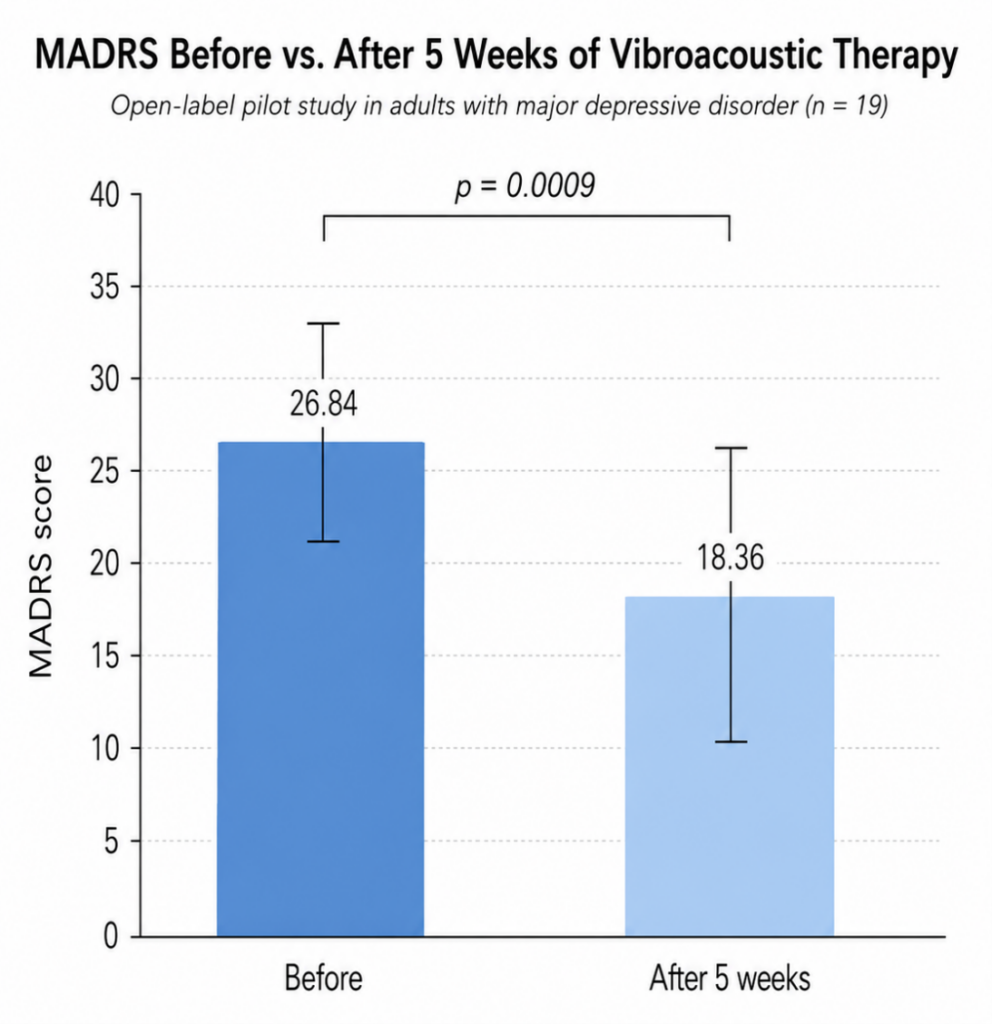
This pilot study evaluated 19 adults diagnosed with major depressive disorder (MDD) who underwent a five-week protocol of auditory and vibrotactile rhythmic sensory stimulation.
Participants completed 30-minute home-based sessions five days per week. The intervention combined instrumental music with vibroacoustic stimulation in the gamma frequency range (30–70 Hz, with emphasis on 40 Hz). Outcomes included changes in Montgomery-Asberg Depression Rating Scale (MADRS) scores and resting-state electroencephalography (EEG).
What Did They Find?
After five weeks, participants demonstrated a significant reduction in depression severity (p = 0.0009). Approximately 37% achieved a clinical response, defined as at least a 50% reduction in MADRS scores.
EEG analyses also revealed measurable changes in brain activity:
- Increased alpha power in the occipital region
- Increased prefrontal gamma activity among treatment responders
- Evidence of modulation of neural networks involved in emotional processing and mood regulation
The authors noted that these neurophysiological changes resemble patterns reported in other depression interventions, suggesting that vibroacoustic stimulation may influence meaningful neural mechanisms.
Why It Matters
Depression is associated not only with emotional symptoms but also with measurable alterations in brain activity. As a result, non-invasive approaches capable of influencing neural function have become an area of growing research interest.
The vibroacoustic intervention used in this study combined:
- Low-frequency mechanical vibration perceived through the body
- Rhythmic auditory stimulation
- Gamma-frequency stimulation associated with neural synchronization and neuroplasticity
Researchers propose that this multimodal sensory input may help modulate brain oscillations involved in mood regulation and cognitive processing.
👉 While larger controlled studies are still needed, these findings support the potential of vibroacoustic therapy as a complementary approach for promoting emotional well-being and nervous system regulation, while also providing objective evidence of changes in brain activity.
Reference: Mosabbir AA, Braun Janzen T, Al Shirawi M, et al. Investigating the Effects of Auditory and Vibrotactile Rhythmic Sensory Stimulation on Depression: An EEG Pilot Study. Cureus. 2022;14(2):e22557. Published 2022 Feb 24. doi:10.7759/cureus.22557
Link to the study: Click here