


Highlights
- Heat therapy improved walking performance in patients with peripheral artery disease (PAD)
- Blood pressure reductions were comparable to, or greater than, those observed with supervised exercise
- Excellent adherence and tolerability
- Promising option for individuals who struggle with conventional exercise programs
Study Design
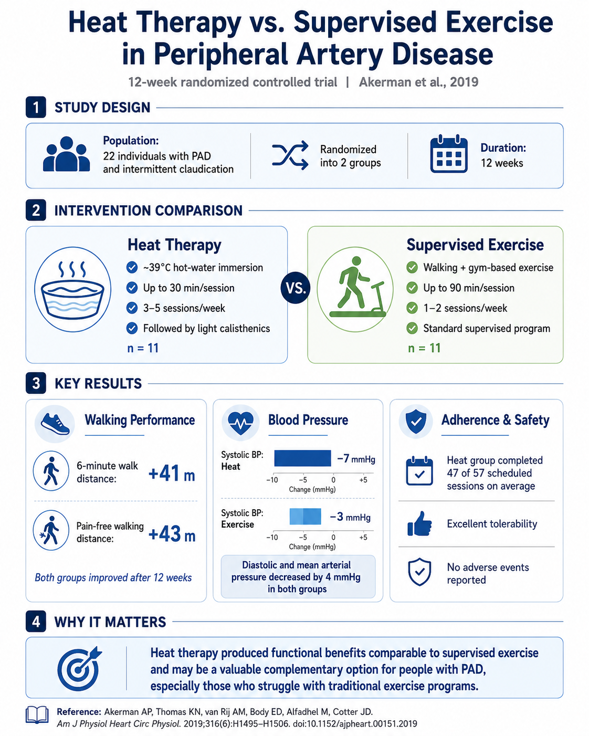
This randomized controlled trial compared 12 weeks of heat therapy with supervised exercise training in 22 individuals with peripheral artery disease and intermittent claudication.
The heat group underwent hot-water immersion at approximately 39°C for up to 30 minutes, 3–5 times per week, followed by light calisthenic activities. The exercise group participated in supervised walking and gym-based exercise sessions.
Researchers assessed walking performance, blood pressure, vascular measures, and quality of life before and after the 12-week intervention.
What Did They Find?
Both groups experienced significant improvements in walking ability after 12 weeks.
Total distance covered during the six-minute walk test increased by approximately 41 meters, while pain-free walking distance increased by approximately 43 meters.
One of the most notable findings was the cardiovascular response to heat therapy. Systolic blood pressure decreased by an average of 7 mmHg in the heat group compared with 3 mmHg in the exercise group. Diastolic and mean arterial pressure also decreased significantly.
Adherence to heat therapy was excellent, with participants completing an average of 47 out of 57 scheduled sessions, and no adverse events were reported.
Why It Matters
Peripheral artery disease often limits mobility because reduced blood flow to the legs causes pain during walking. Although exercise therapy is considered a cornerstone treatment, many patients struggle to adhere to exercise programs because of these symptoms.
Heat therapy provides an alternative way to stimulate the cardiovascular system. Heat exposure increases blood flow, elevates heart rate, and lowers blood pressure, producing physiological responses that share similarities with exercise-induced cardiovascular conditioning.
👉 These findings suggest that heat therapy may serve as a valuable complementary strategy for improving functional capacity and cardiovascular health in individuals with PAD, particularly for those who have difficulty participating in traditional exercise programs.
Reference: Akerman AP, Thomas KN, van Rij AM, Body ED, Alfadhel M, Cotter JD. Heat therapy vs. supervised exercise therapy for peripheral arterial disease: a 12-wk randomized, controlled trial. Am J Physiol Heart Circ Physiol. 2019;316(6):H1495-H1506. doi:10.1152/ajpheart.00151.2019
Link to access the study: Click here