

Highlights
- Cold laser therapy (CLT) was evaluated as a non-antibiotic treatment for mastitis in organic dairy cattle.
- CLT reduced bacterial counts compared to untreated controls.
- Laser-treated cows demonstrated lower bacterial growth during follow-up.
- Improvements in milk protein percentage were observed after treatment.
- PBM may represent a supportive and non-invasive strategy for organic dairy management.
Background and Rationale
Mastitis is one of the most significant health and economic challenges in dairy production worldwide. The condition negatively affects milk quality, milk yield, animal welfare, and increases culling rates. While conventional farms frequently rely on antibiotics and anti-inflammatory drugs, organic dairy systems face important restrictions regarding antimicrobial use.As interest grows in non-pharmacological and non-antibiotic interventions, photobiomodulation and cold laser therapy have emerged as promising supportive approaches for mastitis management.
Study Design
A commercial organic dairy farm study evaluated two treatment approaches:
- Acoustic Pulse Therapy (APT)
- Cold Laser Therapy (CLT)
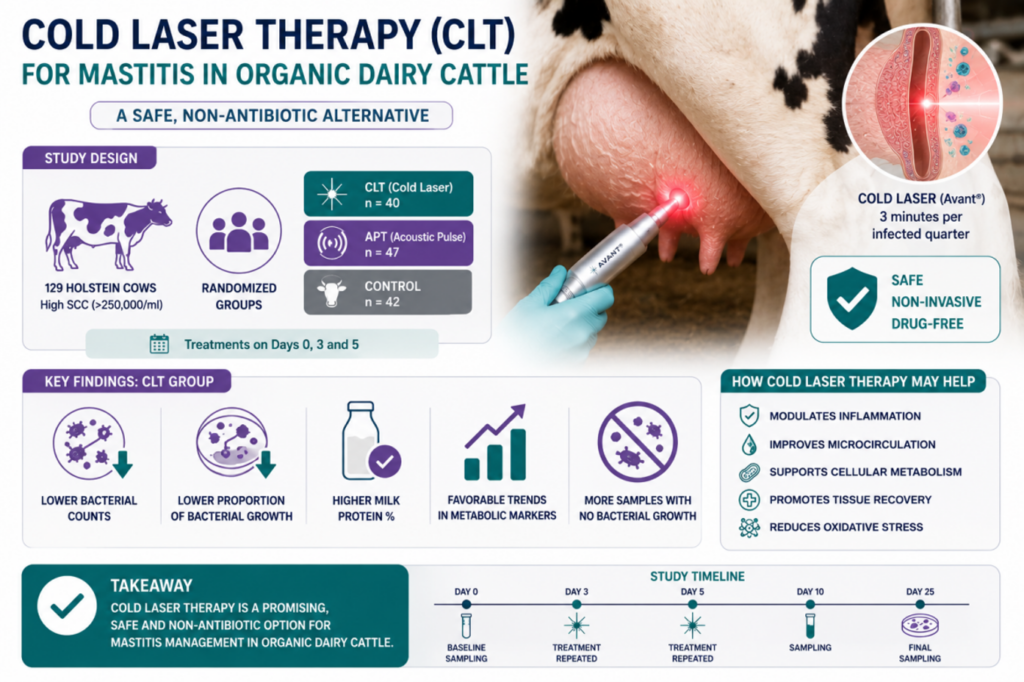
A total of 129 Holstein cows with elevated somatic cell counts were enrolled and randomly assigned into:
- APT group
- CLT group
- Control group
The CLT group received treatment using the Avant® cold laser device for 3 minutes per infected quarter, repeated on days 3 and 5.
Key Findings
Compared to controls, cows receiving cold laser therapy demonstrated:
- Reduced bacterial colony counts
- Lower proportion of bacterial growth during follow-up
- Higher milk protein percentage on day 10 post-treatment
- Trends toward improved metabolic markers
Importantly, several milk samples from the CLT group showed no bacterial growth during follow-up evaluations.
Why PBM May Be Relevant in Mastitis
Photobiomodulation may contribute to:
- Modulation of inflammatory responses
- Improved local microcirculation
- Cellular metabolic support
- Tissue recovery and healing
- Reduction of oxidative stress
In veterinary applications, laser therapy also offers practical advantages:
- Non-invasive application
- No tissue trauma
- Drug-free approach
- Well tolerated by animals
Clinical Interpretation
Although further large-scale studies are needed, the findings suggest that cold laser therapy may represent a valuable supportive tool for mastitis management in organic dairy systems. The reduction in bacterial counts and favorable milk quality parameters reinforce the growing interest in PBM-based veterinary approaches.
Takeaway
Cold laser therapy represents a promising non-antibiotic and non-invasive strategy for mastitis management in organic dairy cattle. PBM-based approaches may help support udder health while aligning with the growing demand for reduced antimicrobial use in livestock production.
Reference: Shrestha, B., Paudyal, S., Jones, B. W., Pineiro, J., & Spencer, J. Evaluating Effectiveness of Two Commercial Treatment Options for Management of Mastitis in Organic Dairy Cattle.(Preliminary Study Report)